
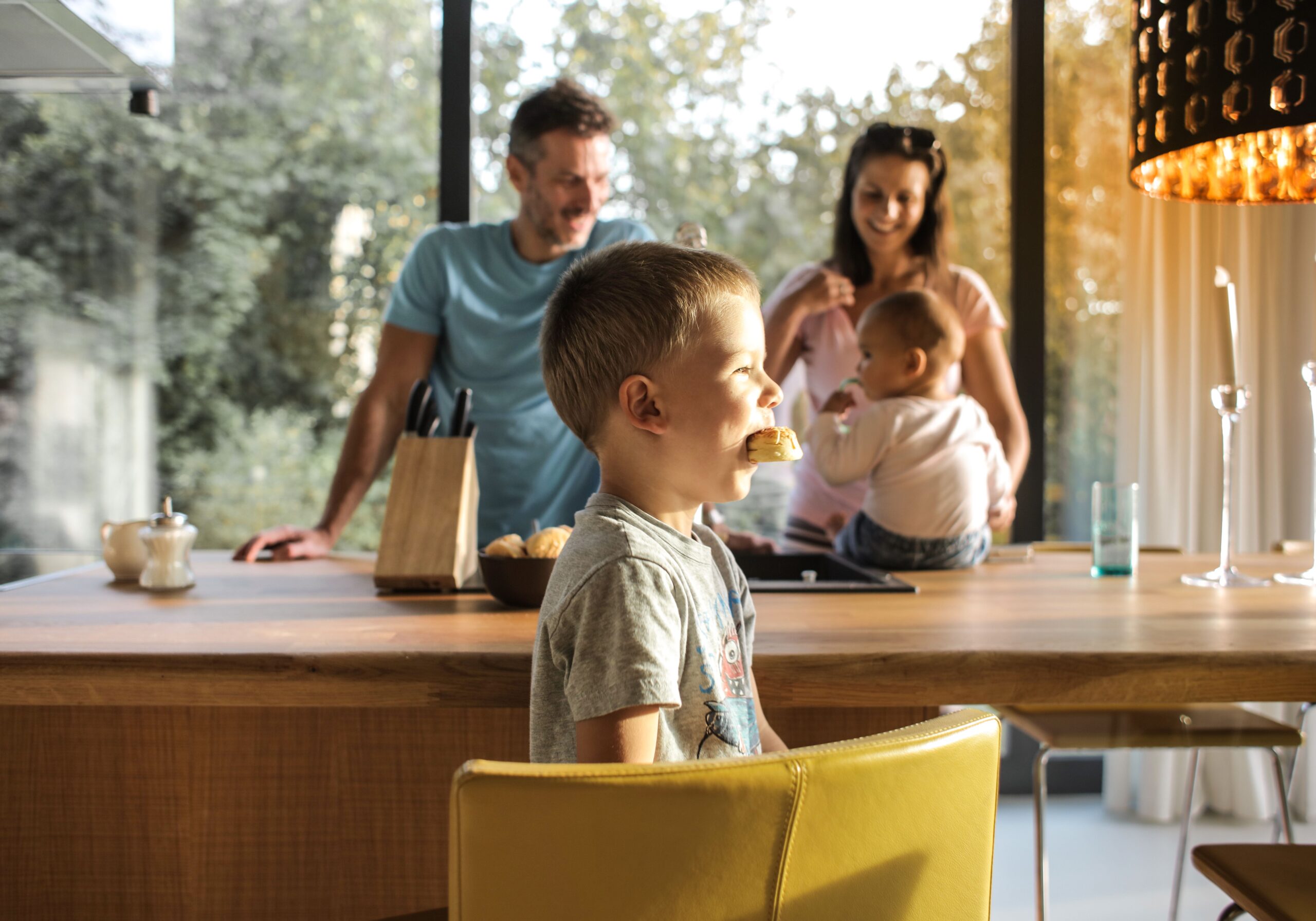
Some Mornings Begin with a Smile. Others Begin with “Hurry Up!”
A morning wellness routine for families doesn’t have to be complicated or time-consuming.
In fact, some of the simplest habits—morning light, gentle movement and a nourishing breakfast—can help families create a more positive start to the day.
Almost all the homes have a similar sound coming from mom or dad in the early morning. “Wake up!” “Brush your teeth!” Where are your socks?” Did you pack your homework?” Come on, we’re getting late!” “bus has arrived; we are late”
Sound familiar?
For many of our families, mornings can feel less like a peaceful beginning and more like a race against the clock. Everybody is in a hurry to begin a day with perfection expecting a smooth easy flow throughout the day.
And somewhere between finding a missing shoe, packing snack boxes and getting everyone out of the house, three simple things often get forgotten:
Morning light. Movement. Breakfast.
We tend to think that creating a healthy family lifestyle requires elaborate meal plans, expensive wellness products, long workouts or perfectly organised schedules.
The beauty of a morning wellness routine for families is that it doesn’t require a complicated schedule. Morning light, movement and breakfast can work together as simple habits that help everyone transition into the day.
No! It doesn’t. Actually it takes a few moments to organise a day with ease and poise.
Sometimes, wellness begins with something as ordinary as opening the curtains, stepping outside for a few minutes, stretching together and sitting down for a simple breakfast.
These little habits may seem insignificant, but repeated consistently, they can help create a more predictable and positive start to the day.
And perhaps the best part to begin a fruitful day ahead?
You don’t need a perfect morning to make this work.
You simply need a few small habits that fit your family’s real life.A morning wellness routine for families doesn’t have to be complicated or time-consuming.
In fact, some of the simplest habits—morning light, gentle movement, and a nourishing breakfast—can help families create a more positive and predictable start to the day.
Almost every home has heard the familiar morning chorus:
“Wake up!”
“Brush your teeth!”
“Where are your socks?”
“Did you pack your homework?”
“Come on, we’re getting late!”
“The bus is here—we’re late!”
Sound familiar?
For many families, mornings can feel less like a peaceful beginning and more like a race against the clock. Everyone is trying to get ready, find what they need, pack lunches or snack boxes, and leave the house on time.
And somewhere between finding a missing shoe and checking the school bag, three simple habits can easily get forgotten:
Morning light. Movement. Breakfast.
We sometimes think that creating a healthy family lifestyle requires elaborate meal plans, expensive wellness products, long workouts, or perfectly organized schedules.
It doesn’t.
A morning wellness routine for families can be much simpler. Opening the curtains, stepping outside for a little while, stretching together, or sitting down for a simple breakfast can become small, manageable parts of the morning.
These habits may seem ordinary, but when they fit naturally into family life, they can help create a more predictable and positive start to the day.
And perhaps the best part?
You don’t need a perfect morning to make this work.
You simply need a few small habits that fit your family’s real life.
Why Does the Morning Matter So Much?
The way we begin our day doesn’t determine everything that happens afterward.
A difficult morning doesn’t necessarily mean you’ll have a difficult day. Sometimes, a rushed morning can still be followed by a calm and peaceful day.
However, our morning environment can influence how we transition from sleep to being awake, active, and ready to take on the day’s responsibilities.
Children, from toddlers to teens, can benefit from predictable routines. When mornings are rushed, everyone can feel the pressure.
A morning wellness routine for families doesn’t have to be perfect. Even a little breathing space can make the morning feel more manageable and give everyone a chance to settle into the day.
Think of your morning routine as a gentle launchpad, not a performance.
The goal isn’t:
“How can I make my family have the perfect morning?”
Instead, ask:
“What small changes could make our mornings feel a little calmer and more manageable?”
What small things can we do consistently to start the day well?
Morning Wellness Routine for Families – That’s where morning light, movement and breakfast come in.
Let the Morning Light In
The first thing you can try doesn’t cost anything.
Open the curtains.
Let natural daylight into the room.
If possible, spend a little time outdoors in the morning—perhaps on a balcony, terrace, garden, or during a short walk.
Morning light is one of the environmental cues that helps regulate our body’s internal clock and sleep-wake rhythm.
For children, this can become part of a pleasant morning ritual rather than another health rule.
Try this:
Instead of waking your child and immediately switching on a bright artificial light, you could open the curtains and say:
“Good morning! Look at the sunshine. How bright and beautiful the morning is today!”
On pleasant days, you could have breakfast near a window or step outside together for a little while.
If you’re already walking your child to the bus stop or school, that everyday journey can also be a natural opportunity to spend some time in daylight.
A Little Real-Life Example
Imagine two mornings.
On Monday, everyone wakes up, stays indoors, rushes through dressing and breakfast, and leaves home in a flurry of instructions.
On Tuesday, you wake up a little earlier, open the curtains, play some cheerful music, and step outside with your child while you water the plants.
Nothing dramatic has changed.
But the feeling of the morning may be completely different.
Sometimes wellness is less about adding another task and more about changing the way we experience the tasks we already do.
Add Some Morning Movement
No, your child doesn’t need a serious workout at 7 a.m.
And parents certainly don’t need to turn breakfast time into a fitness boot camp!
Morning movement can be incredibly simple.
Try:
- Stretching
- Walking
- Dancing to one song
- Gentle yoga
- A few playful movements
- Walking around the house while getting ready
- Taking the stairs when practical
- A short outdoor stroll
- Playing with a pet
- Watering plants together
For younger children, play is movement. You might say:
“Let’s walk like elephants!”
Then:
“Now hop like frogs!”
Then:
“Can you stretch as tall as a giraffe?”
Suddenly, your child is moving without feeling like they’re doing a formal workout.
The One-Song Movement Trick
Here’s a simple idea for busy mornings.
Choose one upbeat song.
When it starts, everyone moves.
Dance. Stretch. March. Clap. Shake out those sleepy arms.
When the song ends, it’s time to get ready.
That’s it.
You don’t need to turn the morning into a structured exercise session. You’re simply introducing a little movement and fun into the morning.
And if everyone is too sleepy to dance?
That’s okay too. A few gentle stretches can be a simple way to get moving.
Regular physical activity is important for children, and the CDC encourages age-appropriate, enjoyable movement and active play. For children ages 3–5, activity throughout the day is recommended; children and teens ages 6–17 are recommended to get at least 60 minutes of physical activity each day. That doesn’t mean the entire amount needs to happen during the morning.

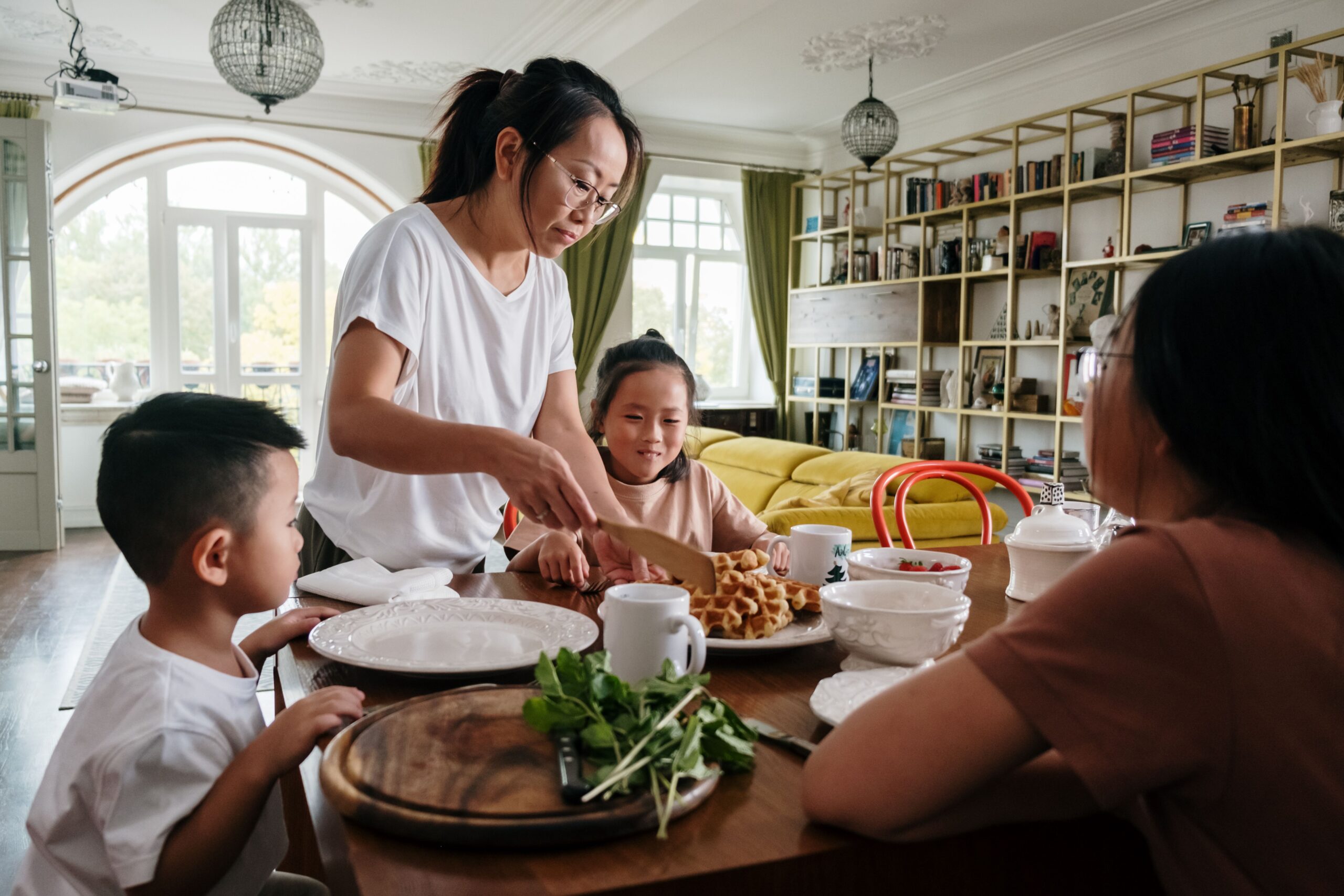
Don’t Let Breakfast Become an Afterthought
Now comes the third piece of the morning puzzle:
Breakfast.
Don’t Let Breakfast Become an Afterthought
Now comes the third piece of the morning puzzle:
Breakfast.
We’re not talking about an elaborate breakfast spread. Nobody needs to prepare seven different dishes at 6:30 in the morning!
A practical family breakfast can be:
- Simple
- Nourishing
- Familiar
- Appropriate for your family’s needs
- Easy enough to prepare on busy mornings
Depending on your family’s preferences, culture, dietary needs, and age-appropriate food choices, breakfast might include combinations such as:
- Idli with sambar
- Vegetable dosa
- Upma with vegetables
- Poha with peanuts and vegetables
- Oats with fruit and nuts
- Eggs with whole-grain toast
- Vegetable sandwiches
- Homemade paratha with curd
- Dalia with fruit
- Yogurt with fruit and seeds
- A simple homemade smoothie alongside another food
The aim isn’t to create a “perfect” breakfast. It’s to make breakfast a manageable part of the family’s routine without turning every morning into a battle over food.
The Breakfast Mistake Many Parents Make
Sometimes we become so focused on what children should eat that breakfast turns into a negotiation.
“Just one more bite.”
“Finish everything.”
“Eat your fruit.”
“Don’t leave anything.”
And suddenly, breakfast becomes stressful.
Instead, try creating a relaxed breakfast environment whenever possible.
Offer appropriate choices.
For example:
“Would you like idli or dosa?”
rather than:
“What do you want to eat?”
The first question gives a child some independence while keeping the options manageable.
Children’s appetites can also vary from day to day. Current CDC guidance recommends paying attention to children’s hunger and fullness cues rather than expecting them to finish everything on their plate.
If you have concerns about your child’s eating habits, growth, or nutrition, it’s best to discuss them with a qualified pediatrician or registered dietitian rather than relying on general online advice.
What If Your Child Doesn’t Want Breakfast?
This is a common parental concern.
Some children wake up hungry, while others may not feel ready to eat immediately. Rather than turning breakfast into a daily argument, consider looking at the bigger picture.
Ask yourself:
- What time did my child eat dinner?
- Is bedtime too late?
- Is the morning too rushed?
- Are there too many distractions at breakfast?
- Is there something simple my child usually enjoys?
You can also discuss persistent appetite concerns with your child’s healthcare professional.
The goal is to build healthy eating habits—not create anxiety around food.

The Magic of a Morning Wellness Routine for Families
Morning light. Movement. Breakfast.
Individually, each one is simple.
Together, they can become a lovely family ritual.
Imagine this:
7:00 a.m.
Curtains open. Natural daylight fills the room.
7:05 a.m.
Everyone stretches for a couple of minutes.
7:10 a.m.
One favourite song plays while everyone gets moving.
7:20 a.m.
Breakfast is served.
7:35 a.m.
Bags are checked.
7:40 a.m.
Shoes on.
7:45 a.m.
Out the door.
Of course, real life isn’t always this neat!
Someone will lose a water bottle.
Someone will suddenly remember a school project.
Someone will announce that their uniform is “missing” even though it’s sitting on the chair.
That’s family life.
The purpose of a morning routine isn’t to eliminate chaos.
It’s to give the chaos a little structure.
A Story From a Typical Family Morning
Let’s call them the Varma family.
Every morning, Mrs. Varma found herself repeating the same instructions:
“Wake up.”
“Brush.”
“Get dressed.”
“Eat.”
“Pack your bag.”
“Where are your shoes?”
By 8 a.m., she felt exhausted. Her children weren’t particularly happy either.
Instead of changing everything at once, she decided to introduce a few small changes that wouldn’t disrupt the family’s entire morning.
She opened the curtains as soon as everyone woke up.
Then she introduced a two-minute family stretch.
Finally, she prepared breakfast ingredients the previous evening whenever possible.
After a couple of weeks, she noticed something interesting.
The mornings weren’t magically perfect.
But there were fewer frantic moments. The children began reminding each other about the little routine.
One morning, her younger child even opened the curtains and announced:
“Come on! Morning time!”
That’s the beauty of small habits.
Children don’t always need long lectures about wellness.
Sometimes they learn simply by living the routine with us.
How Busy Parents Can Make This Realistic
Is this really possible with busy working parents?
Let’s be honest.
Not every parent has an hour available every morning.
Some parents have to leave early for work. Some children have long school commutes. Some mornings involve younger siblings, elderly family members, or simply unpredictable schedules.
So forget the perfect Instagram morning.
Instead, look for small habits that fit your family’s actual life.
Maybe it’s opening the curtains while everyone wakes up.
Maybe it’s a few stretches while breakfast is being prepared.
Maybe it’s playing one favourite song while everyone gets ready.
Maybe it’s simply sitting together for breakfast when time allows.
You don’t have to do everything every morning.
Choose what works for your family and build from there.
A 10-Minute Morning Wellness Routine for Families
Keep It Simple When Life Gets Busy
Even a morning wellness routine for families can be simple when life is busy.
You might think of it this way:
A few minutes — Light
Open the curtains and step outside if practical.
A few minutes — Movement
Stretch, walk, dance, or play.
Breakfast — Keep It Simple
Choose something nourishing that can be prepared without adding unnecessary stress.
That’s it.
If you have more time, wonderful.
If you don’t, that’s okay too. You don’t have to fit every healthy habit into every morning.
The goal is to find small habits that work for your family’s circumstances.
Prepare the Night Before
One of the simplest ways to make mornings feel calmer is to move a few tasks to the previous evening.
You could:
- Keep school uniforms ready
- Pack school bags
- Fill water bottles
- Prepare breakfast ingredients
- Decide what breakfast will be
- Keep shoes together
- Check the next day’s schedule
This isn’t about becoming a super-organised parent.
It’s about reducing the number of decisions you have to make when everyone is sleepy.
For example, instead of asking:
“What should I make for breakfast tomorrow?”
while standing in front of the refrigerator at 7 a.m., decide the night before.
Even better, create a simple weekly breakfast rotation. Planning ahead can make busy mornings feel more manageable.
A Simple 7-Day Breakfast Rotation
Here’s an example:
Monday: Vegetable poha + fruit
Tuesday: Idli + sambar
Wednesday: Vegetable sandwich + yogurt
Thursday: Dosa + chutney
Friday: Oats + fruit + nuts or seeds, as appropriate
Saturday: Egg or paneer sandwich + fruit
Sunday: Family favourite breakfast
You can change this according to your family’s culture, dietary needs, preferences, and available ingredients.
The point isn’t the exact menu.
The point is removing some of the morning decision-making.
The Dewdrops and Giggles Morning Wellness Challenge
Why not try this for one week?
Don’t change your entire lifestyle.
Just choose three small habits:
☀️ LIGHT
Open the curtains or spend a little time outdoors.
🧘 MOVEMENT
Move together for a few minutes.
🍽️ BREAKFAST
Have a simple, nourishing breakfast that works for your family.
And add one bonus habit:
❤️ CONNECTION
Share one kind word before everyone leaves home.
At the end of the week, ask your family:
“Did our mornings feel different?”
You might be surprised by the answers.
Morning Wellness Routine for Families – Frequently Asked Questions
1. How much morning light does a child need?
There isn’t one universal number that applies to every child or family. The important idea is to expose children to natural daylight as part of their normal morning routine when practical and safe.
Outdoor time should always be appropriate for the weather and local conditions.
2. Does my child need to exercise in the morning?
Not necessarily.
Children need regular physical activity throughout the day, but it doesn’t have to happen first thing in the morning. Morning movement can simply be a fun way to wake up and get the body moving.
3. What if we don’t have time for a long morning routine?
Keep it tiny.
Try:
Open the curtains + stretch for two minutes + eat a simple breakfast.
A routine that takes ten minutes and actually happens is more useful than a one-hour routine that nobody can maintain.
4. What is the healthiest breakfast for children?
There isn’t one perfect breakfast for every child.
Aim for a varied diet that includes nutritious foods appropriate for your child’s age, preferences and dietary needs. If your child has specific nutritional requirements or you have concerns about growth or eating, consult a qualified healthcare professional.
For Breakfast ideas, Read this article –5-Minute Magic Meals: Healthy Toddler Snacks That Even Exhausted Moms Can Make!
5. What if my child refuses to move or exercise?
Don’t make it feel like exercise.
Put on a favourite song.
Walk together.
Play a movement game.
Stretch like animals.
Let children choose between two activities.
The goal is to make movement enjoyable rather than another task they are forced to complete.
6. Can teenagers follow the same routine?
Absolutely—but give them more ownership.
Instead of telling a teenager exactly what to do, involve them in creating their morning routine.
Ask:
“What helps you feel ready for the day?”
They may choose music, a short walk, stretching, breakfast or simply spending a few quiet minutes near a window.
7. Do we have to follow the same routine every day?
No.
Family life isn’t a machine.
Weekdays, weekends, holidays and school schedules will naturally look different.
Think of your routine as a framework, not a rigid timetable.
Final Thoughts: Start Small, Start Together
A morning wellness routine for families isn’t about creating a perfect morning. It’s about creating small habits that help your family begin the day with a little more energy, connection and calm.
We often imagine that healthier family life requires big changes.
But sometimes the most meaningful changes are incredibly ordinary.
Open the curtains.
Let the morning light in.
Move your body.
Eat something nourishing.
Talk to your child.
Take a breath.
Then begin the day.
You don’t need a picture-perfect morning.
You don’t need matching breakfast bowls or an elaborate wellness schedule.
You don’t even need to get everything right.
You simply need a few small habits that your family can realistically repeat.
Because healthy living isn’t built in one giant transformation.
It’s built in the little things we do again and again.
And tomorrow morning, before the rush begins, perhaps try something very simple:
Open the curtains.
Put on one cheerful song.
Move together.
Share breakfast.
And before everyone walks out the door, say:
“Have a good day. I’ll see you later.”
“Some children benefit from regular physical activity throughout the day.” The CDC’s physical activity guidelines for children and adolescents provide age-specific recommendations.
The CDC guidance says children and adolescents ages 6–17 should get 60 minutes or more of moderate-to-vigorous physical activity daily, while preschoolers should be active throughout the day.mes, that’s a pretty wonderful way to begin.
📌 Quick Takeaway for Parents
A simple family morning can include:
☀️ Natural morning light
🧘 A few minutes of movement
🍳 A simple nourishing breakfast
❤️ A moment of connection
🎒 A little preparation the night before
Small habits. Less pressure. A calmer start.
Do check out my other articles on easy recipes and cooking.