
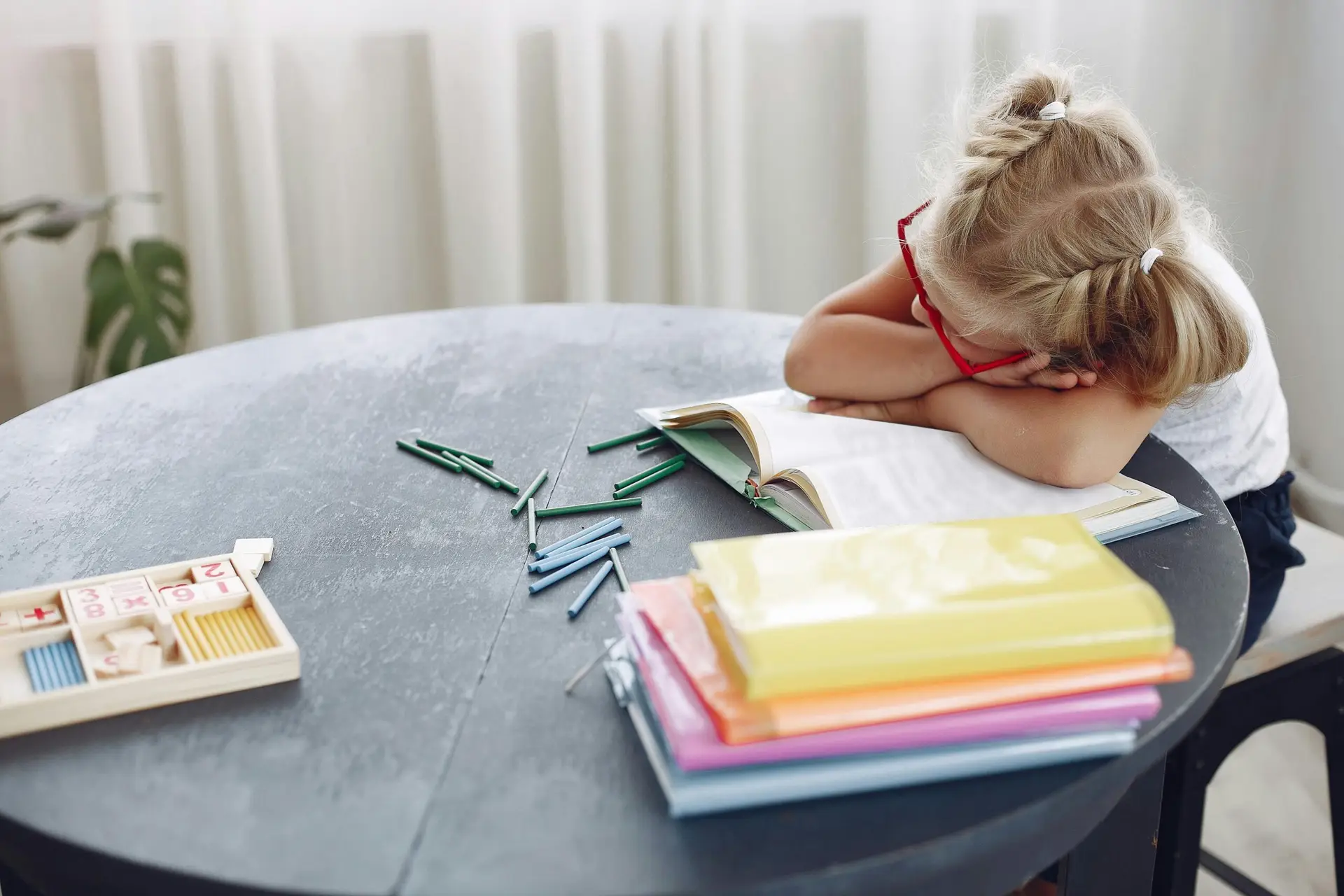
Emotional Exhaustion in Children – Introduction
Emotional exhaustion in children is becoming increasingly common in today’s fast-paced world. Even happy and active kids can silently feel overwhelmed emotionally.You regularly see your child laughs, plays, goes to school, and seems perfectly fine on the outside.
But then suddenly:
- they react and melt down over tiny little things,
- get irritated and frustrated easily,
- struggle to sleep,
- cling more than usual,
- or say, “I’m tired,” even after doing very little.
Many parents today are noticing something unusual: Children look happy… yet emotionally drained.
Modern childhood is very different from what it used to be.
Many children today may be exposed to a combination of noise, screens, academic pressure, busy schedules, social expectations and other forms of stimulation.
- noise,
- screens,
- pressure to perform,
- packed schedules,
- overstimulation,
- and emotional overload.
Even loving, caring parents sometimes miss the silent emotional pressure building inside their children because it doesn’t always appear as obvious sadness.
The good news?
Small changes at home can make a huge difference.
In this article, we’ll explore:
- the hidden emotional pressures affecting children today,
- signs your child may be emotionally exhausted,
- and practical ways parents can create a calmer, emotionally healthier environment.
What Is Emotional Exhaustion in Children?
In this article, I use the phrase “emotional exhaustion” to describe a child who may be feeling emotionally overwhelmed or worn down by ongoing stress, demands or stimulation. It is not a diagnosis, and similar behaviours can have many different causes.
Children may not say:
“I’m emotionally overwhelmed.”
Instead, they may communicate that something is difficult through changes in their behaviour, mood or routines. This can sometimes be mistaken for simple misbehaviour.
You may notice:
- irritability,
- tantrums,
- withdrawal,
- difficulty concentrating,
- sleep struggles,
- or becoming unusually sensitive.
These signs do not automatically mean that a child is emotionally exhausted. They are simply reasons for parents to pause, observe patterns and consider whether the child may need more rest, connection, support or a conversation with a trusted professional.
A child who is struggling is not necessarily a “badly behaved” child. Behaviour can sometimes be a way of communicating that a child needs support.
Signs of Emotional Exhaustion in Children
1. Too Much Stimulation, All the Time
Children today may move between school, homework, tuition, activities, screens and social interactions with very little quiet time in between. While activities and technology can be enjoyable and useful, a day that is constantly filled with stimulation may leave some children feeling tired or overwhelmed.
Children also need opportunities to slow down, rest and simply be present without having to respond to constant information or entertainment.
For example, a child who spends the day at school, attends an evening class, watches videos during meals and uses a screen before bedtime may have very little time for quiet play, conversation or rest.
This does not mean that screens or activities are automatically harmful. The important question is whether the child’s overall routine includes enough sleep, rest, movement, unstructured play and connection with family.
Try asking yourself:
- Does my child have some quiet time during the day?
- Is the daily schedule too full?
- Does my child get opportunities for unstructured play?
- Is there enough time to wind down before bedtime?
Sometimes, creating a little more breathing space in the day can help children feel calmer and better able to manage everyday demands.
A Simple Example
A child may be attending school, tuition, dance class, and then spend time on screens before bed.
Nothing seems “wrong.” But the brain never fully relaxes. It’s stimulated Over time, this creates emotional fatigue.

2. Children Can Absorb Adult Stress
Children are often sensitive to the emotional atmosphere around them. When parents or caregivers are dealing with work pressure, family responsibilities, financial worries or other sources of stress, children may notice changes in tone, routines or interactions even when adults do not discuss the problem with them.
This does not mean that parents must hide every difficult emotion from their children. In fact, seeing adults handle emotions in healthy ways can be a useful learning experience.
For example, a parent might say:
“I’m feeling stressed today, so I’m going to take a few quiet minutes and then we can talk.”
This shows the child that difficult emotions can be acknowledged and managed appropriately.
I remember a mother sharing with me that during a particularly stressful period at work, she noticed her young son becoming more clingy and wanting her attention more often. Instead of assuming that he was simply being difficult, she began paying closer attention to his need for reassurance and made a little more time for calm connection.
The lesson is not that parental stress automatically causes emotional exhaustion in children. Rather, it is worth noticing how stress may affect family interactions and making space for connection when possible.
A child may not understand the situation logically, but emotionally they absorb the atmosphere around them.

3. Over-Scheduling Can Leave Little Room to Breathe
Children may have busy days filled with school, homework, tuition, sports, music, dance, social activities and screen time. Activities can be enjoyable and beneficial, but children also need some unstructured time in which they are not expected to perform, achieve or follow a schedule.
When every part of the day is planned, some children may have fewer opportunities to rest, explore their own interests or simply be bored.
Unstructured time can give children opportunities to:
- use their imagination,
- play independently,
- explore their interests,
- practise problem-solving,
- and decide how they would like to spend some of their free time.
Boredom is not necessarily a problem that parents need to solve immediately. A quiet afternoon without planned entertainment can sometimes give children the space to create their own games, stories or activities.
The goal is not to remove activities from a child’s life. It is to find a reasonable balance between structured activities, responsibilities, rest, family connection and free time.

4. Performance Pressure and Unrealistic Expectations
Children may experience pressure from many directions—schoolwork, exams, extracurricular activities, family expectations, peer relationships and social media.
A little encouragement can motivate children, but constant comparison or pressure to perform can sometimes make children feel that their worth depends on their achievements.
Parents can help by focusing not only on results but also on effort, learning, progress and well-being.
Instead of:
“Why didn’t you get higher marks?”
try:
“How did you find the test? Was there anything you found difficult?”
This creates an opportunity for conversation rather than immediately focusing on the result.
Children also benefit from knowing that mistakes and setbacks are normal parts of learning. A supportive home environment can help them feel comfortable asking for help when something is difficult.
The aim is not to remove expectations completely. It is to create expectations that are realistic, age-appropriate and balanced with rest, relationships and emotional well-being.

5. Lack of Emotional Processing Time
Children experience many emotions throughout the day—excitement, disappointment, frustration, embarrassment, worry and joy. They may move from one experience to another without having much time to pause and process what happened.
Sometimes a child who has had a difficult day at school may appear irritable or unusually quiet at home. This does not necessarily mean the child is emotionally exhausted, but it can be an opportunity to check in gently.
Instead of immediately asking lots of questions, parents can create a calm opening:
“You seem a little quiet today. I’m here if you want to talk.”
Some children will want to talk immediately. Others may need time before they are ready.
Simple activities such as talking during a walk, drawing together, having a quiet bedtime conversation or sharing a meal can create natural opportunities for children to express themselves.
The goal is not to make children discuss every emotion. It is to let them know that their feelings can be noticed, accepted and talked about when they are ready.

Signs That a Child May Be Feeling Overwhelmed
Emotional exhaustion does not look the same in every child. A child may show changes in behaviour, mood, sleep, concentration or physical comfort when they are dealing with ongoing stress or feeling overwhelmed.
These signs can also have many other explanations, so they should not automatically be interpreted as emotional exhaustion. Instead, think of them as possible signals that deserve a closer look.
Emotional Signs
You may notice:
- becoming more irritable than usual,
- frequent frustration,
- appearing unusually worried,
- becoming more sensitive to small problems,
- losing interest in activities they normally enjoy,
- or seeming emotionally withdrawn.
Behavioural Signs
Stress can sometimes be accompanied by changes such as:
- have more frequent emotional outbursts,
- avoid activities they previously enjoyed,
- become unusually clingy,
- resist everyday routines,
- or find it harder to cooperate than usual.
Physical or Routine Changes
Stress can sometimes be accompanied by changes such as:
- difficulty settling at bedtime,
- changes in sleep patterns,
- tiredness,
- headaches or stomach discomfort,
- or changes in appetite.
- These symptoms are not specific to emotional exhaustion and can have physical, developmental or emotional causes. If a change is persistent, severe, affecting daily life, or concerning to you, it is appropriate to discuss it with your child’s pediatrician or another qualified health professional.
- The key is to look for patterns rather than reacting to one difficult day.
Naughty vs. Overwhelmed: Understanding the Difference
Sometimes behaviour is communication. There is a thin line between being naughty or overwhelmed.
When a child is tired, frustrated or overwhelmed, their behaviour may become more difficult to manage. They may refuse instructions, have an emotional outburst, become unusually quiet or struggle with everyday tasks.
It can be tempting to describe this simply as “bad behaviour.” But behaviour can sometimes give parents useful information about what a child may be experiencing.
Before reacting, try asking:
- “What might my child be communicating through this behaviour?”
Perhaps the child is tired. Perhaps the day has been unusually demanding. Perhaps they need connection, a break or help expressing what they are feeling.
This does not mean that every difficult behaviour should be excused or that children should have no boundaries. Children still need clear, age-appropriate expectations and guidance.
A helpful approach can be to acknowledge the feeling while maintaining the boundary.
For example:
“I know you’re frustrated, but we still need to put the toys away. I’ll help you get started.”
This allows the parent to remain calm and supportive while still teaching responsibility and appropriate behaviour.
How Parents Can Reduce Emotional Pressure at Home
1. Slow Down the Daily Routine
When children are moving from one activity to another throughout the day, they may have little opportunity to pause and reset. A calmer routine does not mean removing everything from a child’s schedule. It can simply mean creating a little more breathing space between activities.
Try to avoid filling every available moment with instructions, entertainment or activities.
You might:
- leave a few minutes of quiet time after school,
- allow some unstructured play,
- keep mealtimes as opportunities for conversation,
- create a predictable bedtime routine,
- and give children time to transition between activities.
Even small changes can make a busy day feel more manageable.
Sensory toys for calm time
Ask yourself:
Does my child’s daily routine leave enough time for rest, play, connection and simply being a child?
Recommended Product:
Play-Doh Modeling Compound Pack
2. Screen Overload and Emotional Exhaustion
Screens are a normal part of modern family life and can provide entertainment, education and opportunities for connection. The concern is not simply whether a child uses screens, but whether screen use is crowding out important parts of everyday life such as sleep, physical activity, face-to-face interaction, play and family time.
Parents can look at the child’s overall routine rather than focusing only on a number of minutes.
Consider:
- Is screen use interfering with bedtime or sleep?
- Does your child still have time for active play?
- Are there regular opportunities for face-to-face family interaction?
- Does your child have some screen-free periods during the day?
- Is screen use making transitions or family routines more difficult?
Simple boundaries can help. For example, families might keep meals and the period before bedtime relatively screen-free, while choosing age-appropriate content and making time for other activities.
The goal is not to make screens the enemy. It is to create a healthy balance between technology and the other experiences children need for healthy development.
Recommended Product:
Skillmatics Art and Craft Activity Box

3. Create Emotional Safety at Home
Children need to know that they can talk about their feelings without immediately being judged, dismissed or punished for having them.
Emotional safety does not mean agreeing with everything a child says or allowing every behaviour. Parents can acknowledge feelings while still maintaining appropriate boundaries.
Try phrases such as:
- I can see that you’re upset.”
- “It’s okay to feel angry.
- We still need to speak respectfully.”
- “Would you like to tell me what happened?”
- “I’m here when you’re ready to talk.”
Listening calmly can sometimes be more helpful than immediately offering advice or solutions.
Children also learn from how adults respond to their own emotions. When parents model healthy ways of handling frustration, disappointment and stress, children get an opportunity to observe those skills in everyday life.
The aim is to create a home where children feel heard, supported and guided, while also learning that all feelings are acceptable but not every behaviour is appropriate.
Emotion flash cards for kids” Helps children express emotions better.
Recommended Product:
Skillmatics Flash Cards – Emotions

4. Prioritize Connection Over Perfection
Parents often feel pressure to get everything right—healthy meals, schoolwork, activities, routines, behaviour and family responsibilities. But children do not need perfect parents. They need caring adults who are willing to listen, connect and repair relationships when things go wrong.
A few minutes of genuine attention can be meaningful when they happen regularly.
You might:
- sit together and talk after school,
- read a bedtime story,
- take a short walk,
- cook something together,
- play a simple game,
- or simply listen when your child wants to share something.
These ordinary moments can help children feel noticed and connected.
Connection does not have to be complicated.
Small moments of attention deeply nourish children emotionally.
If you have had a difficult day as a parent, don’t use that as a reason to feel guilty. Parenting involves imperfect moments. What matters is continuing to build a relationship in which your child experiences care, attention and emotional support.

5. Sleep and Rest Matter
Rest is an important part of children’s physical and emotional well-being. When children are tired, they may find it harder to manage frustration, concentrate on tasks or respond calmly to everyday challenges.
A predictable bedtime routine can help children transition from the activities of the day to sleep.
Depending on the child’s age, family routines might include:
- reducing stimulating activities before bedtime,
- keeping the bedroom environment comfortable and calm,
- following a consistent bedtime routine,
- reading or talking quietly together,
- and keeping screens away from the immediate bedtime routine when possible.
Rested children cope better emotionally.
Children have different sleep needs depending on their age and individual circumstances. If your child regularly has significant difficulty sleeping or you are concerned about their sleep, discuss it with their pediatrician.
Sometimes the most helpful addition to a busy child’s day is simply more time to rest.
Recommended Product:
Goodnight Moon
Kids Weighted Blanket Supports calm sleep and relaxation.
Recommended Product:
YnM Kids Weighted Blanket

Boredom Is Not the Enemy
In a world filled with screens, activities and constant entertainment, children may have fewer opportunities to experience boredom. Yet quiet, unstructured moments can give children space to decide what they would like to do.
When a child says, “I’m bored,” parents do not always need to provide an immediate solution.
You might respond:
“I know you’re bored. What could you think of doing?”
Offer a few simple possibilities if needed, but allow the child to make the final choice.
Boredom can sometimes encourage children to:
- use their imagination,
- create their own games,
- explore interests, practise problem-solving,
- and become more comfortable with quiet time.
Boredom should not be treated as a cure for emotional exhaustion, and children who are genuinely struggling may need more support. But allowing some unstructured time can be a healthy part of a balanced childhood.
Emotional Exhaustion in Children – Raising Emotionally Healthy Children in a Fast World
We cannot completely remove stress from childhood. But we can create homes where children feel:
- safe,
- heard,
- emotionally supported,
- and less pressured to constantly perform.
Children don’t need perfect parents. They need emotionally available ones.
A Gentle Reminder for Parents
If you notice changes and your child seems more emotional lately, it does not mean you are failing. As I have mentioned in several of my blogs, parenting involves trial and error. We learn every day about what works for our children and what may need to change.
Modern parenting is happening in a very stimulating and demanding world, and parents are learning to navigate challenges that may look different from those faced by previous generations.”The goal is not perfection at all.The goal is greater awareness of what our children may be experiencing.”As I have mentioned in several of my blogs, parenting involves trial and error. We learn every day about what works for our children and what may need to change.
Small intentional changes:
- calmer routines,
- more connection,
- emotional validation,
- and slower moments,
- quality time
- personal anecdotes and experiences can have a lasting impact on your child’s emotional well-being.
| Calm Reset Idea | Benefit |
|---|---|
| Evening family walk | A chance to unwind and connect |
| 10 minutes of cuddling | Emotional connection |
| Quiet reading time | A calmer transition toward bedtime |
| Nature play | Time away from constant stimulation |
| Screen-free dinner | More opportunity for conversation |
| Deep breathing together | A simple calming practice |
Disclaimer: This article may contain affiliate links. If you purchase through these links, we may earn a small commission at no extra cost to you. We only recommend products we genuinely believe are helpful for parents and children.
Helpful Books
Helpful Organizations
Emotional Exhaustion in Children – Conclusion
Emotional exhaustion in children can sometimes be difficult to recognize because children may not have the words to explain what they are experiencing. As parents, our role is not to remove every challenge from childhood, but to create a supportive environment where children can rest, connect, express their feelings and ask for help when they need it.
Sometimes, the most meaningful changes are simple ones—a calmer evening, a little less pressure, a conversation at bedtime, or simply being present when our child wants to talk.
Parenting does not require perfection. It requires awareness, patience, connection and a willingness to learn along the way.
Please do read my other articles on parenting and drop a comment or a feedback.
Gentle Parenting vs Traditional Parenting
Happy Parenting